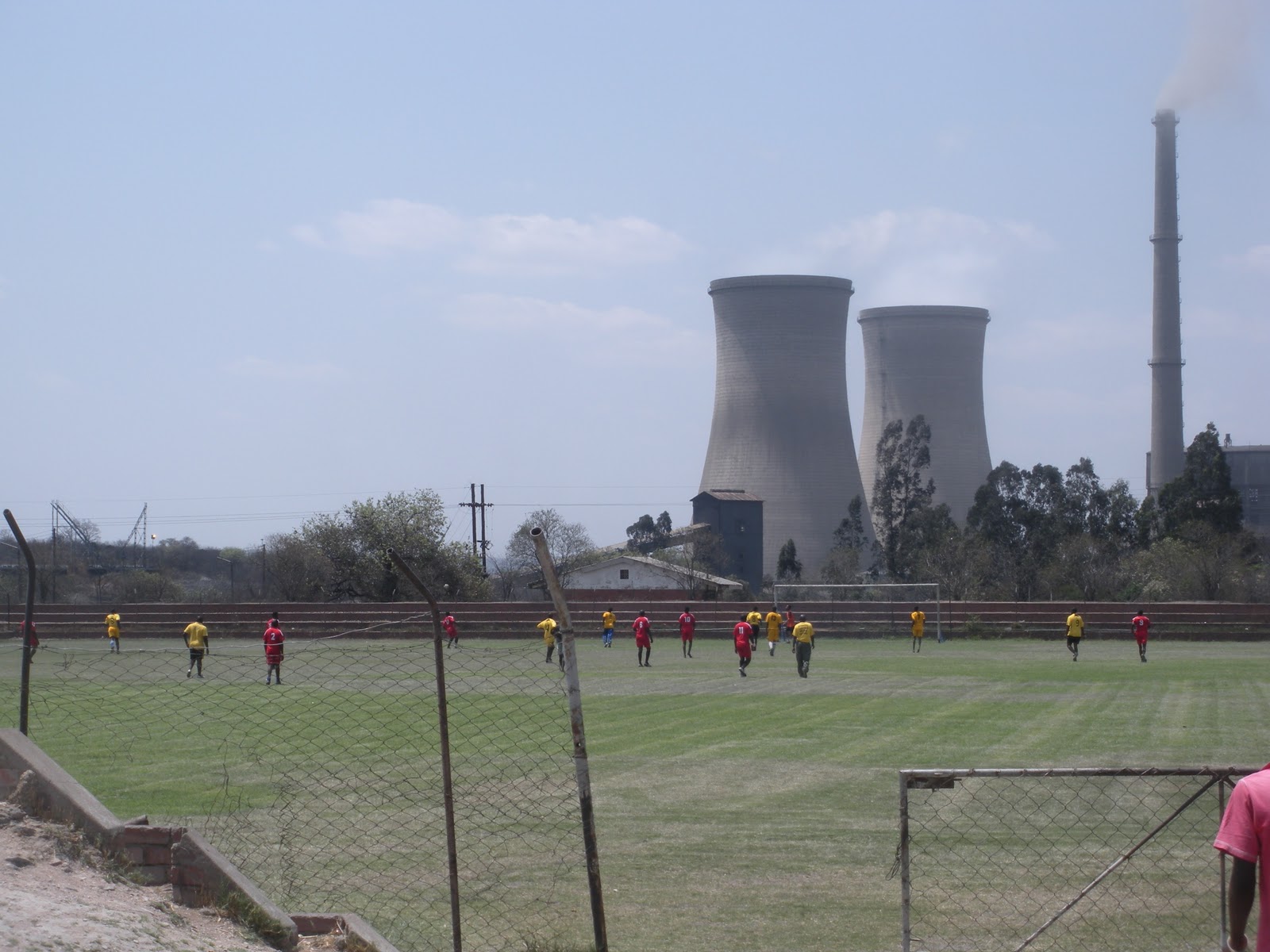
When we went to Vic Falls for a game we played in the shadow of Hwange Power Station. The field was layered with coal dust and my knees were black by the end of the game. The kids from Hwange loved seeing two kiwhas on the team and they chased our bus out of the parking lot.
Support Derek and GRS
Monday, October 31, 2011
Cliff Notes
So I’ve had some requests for blog cliff notes.* Fine, the entries have been a bit long. This gets you up to speed if, like my cousin, you don’t have the attention span to read long posts. Even if you’ve been reading all along, there’s lots of new stuff in here so check it out!
*I'm not endorsing cliff notes. Read the whole book! You'll get more out of it.
Character list:
Derek Stenquist – protagonist, GRS Zim Grants Officer
Alejandro “the ‘stache” Frischeisen – roommate/partner in crime, GRS Zim Business Development Officer
Annie Bauer - GRS Zim Director of Operations
Doc Ndiweni– GRS Zim Director of Health and Local Relations
Methembe – Executive Director “The Big Boss”
Nkosi – GRS-Z intern house guard puppy
Chapter 1: This is Zim
I arrived in Zimbabwe on August 22nd and have since had many adventures. I’m serving as an intern this year, and so far I’ve been assigned the role of Grants Officer for the organization. I write a lot of proposals and grant reports to donors and get to do awesome site visits to check in on our programs or investigate sites for future programs. Alejandro and I work under Doc in the Health and Local Relationships department (which also handles Business Development), and our other role this year has been to kick off GRS Zim’s VCT campaign. More about that in Chapter 9, but preparation for our first VCT has meant lots of networking with local independent and government-funded health organizations to create an HIV health services dream team, ready to deploy to any township with tents, HIV testing kits, CD4 count machine, condoms, peer educator support, and of course, sweet GRS t-shirts.
Chapter 2: Soccer
Soccer games here are always a crazy experience. We went to the Banc ABC Super 8 final between Motor Action Might Bulls and Highlanders FC last month. Highlanders are the team of the people in Bulawayo (nickname Bosso). They used to be a powerhouse in Zimbabwe but have fallen off in recent years. Fans still have very high expectations. Bosso lost 1-0 to Motor Action and 10,000 people in the North stands got upset. They started kicking down the fence at the north end of the stadium and police moved in with tear gas and German Shepherds. We watched from high in the East stands as the police loosed the dogs on the crowd. At another premier league game in Luveve we had a policeman in full riot gear come after us swinging his nightstick. The friends we were with didn’t tell us that the gate they were trying to pull us through actually wasn’t an entrance…
Chapter 3: Food
So far I’ve eaten macimbi (larvae of an endemic tree slug), matemba (tiny fish salty enough to turn your tongue to leather), imbuzi (goat), chicken liver, cow liver, and ox tail. Sadza is the cornmeal mush that doubles as Zimbabwe’s staple carbohydrate and silverware. Too bad it’s so hard to keep your hands clean here.
Chapter 4: Mpilo Hospital
I’ve written about Mpilo quite a few times because it fascinates me and presents such an incredible picture of the overwhelming need that still exists here in Zimbabwe. The hospital houses one of the largest pediatric Opportunistic Infections (AIDS) clinics in Sub-Saharan Africa. It is currently run by Doctors Without Borders, which brought the first ARVs (anti-retroviral drugs) to Bulawayo in 2004. The AIDS epidemic had been raging in Zimbabwe for over 20 years by the time the drugs arrived. The Mpilo OI clinic has a great teen resource center for kids living with HIV. One of the projects the interns have been cooking up in Business Development is a program to put the GRS curriculum to work for HIV-positive kids. We’ve written several proposals to fund SKILLZ Club, a support group for HIV-positive teens using GRS games to build collective identity, self-esteem, and conflict mitigation skills. Most importantly we want to help Mpilo counselors reduce default rates (defaulters are HIV-positive kids who stop taking their ARVs) because HIV-positive individuals who adhere to their treatment are 96% less likely to infect others with HIV! We think GRS has an important role to play in this aspect of treatment for prevention by bolstering support for HIV-positive teens with a soccer-based curriculum that helps realize they can live long, healthy lives if they stick to their treatment regimen.
Chapter 5: Transport
Our trashed Mazda truck has Ultimate Force decals on the front and back. It also has a sticker on the tailgate that says “Bad Boy” and has a little face with devilish eyebrows. We’ve been rolling in the truck for about a month now. The tires are worn completely bald and whenever we put too many people/things in the bed of the truck, the wheelwell grinds ruts into the tire and the air smells like burning rubber because the shocks are kaput. We were promised something safer, but this is Africa and they’re working on the repairs to another car for us. In the meantime, I love cruising with the lefty stickshift. I’m writing about the truck again because we’ve since had some unbelievable episodes with running out of gas. When I wrote about it before, it was funny. Then we ran out of gas three times. In one day. The gas gauge is broken so we have to guess how we’re doing from the sound of the engine.
Chapter 6: Bantu
Ale and I play for Bantu Rovers in the ZIFA southern region division 1 league. Side note: he’s also been grooming an impressive mustache since we got here. Our season’s over now, but we got to do some traveling with the team and see parts of the country we never would have otherwise. The other day we went to a gold mine called How Mine for a game. The sign at the entrance said: “all visitors will be searched upon exit” and the entire complex was surrounded by barbed wire. The field itself sat below an impressive complex of towering scaffolding and machinery and who-knows-what up on the hill they pull the gold out of. On opposite hillside nestled an entire town of squat, white-washed square houses and a few longer, rectangular school buildings. This side was the town for the miners’ families (High-density How Mine housing area). At one end of the field the ground fell away into amazing valleys covered with scrub grass and stunted trees. Everything is dusty here…elephant country. We hear that Zimbabwe has tons of gold, and we’ve seen our share of mines since we’ve been here. Hopefully some day soon Zim will have a government that takes all the country’s abundant natural resources (diamonds, coal, gold, platinum) and puts them to work for the people once again.
During another team trip we went to play up at Vic Falls on the Zambian border, and the team stayed in a backpackers’ lodge and went to see the Falls together the morning before the game. I’ll post some pictures of the team, Falls, and cooking a giant vat of sadza over a fire to feed 25 people. I chopped about 10 pounds of chamolia (local lettuce-type veggie) that night.
Chapter 7: Robbery
We got robbed a month or so ago. The thieves made off with two bikes, two bananas, a can of beans, a jar of peanut butter, and other groceries. Luckily they didn’t come looking for our bedrooms because we were in the house, asleep! Two days later they came back and siphoned gas out of the truck. Since then we’ve upgraded our security systems considerably (added an extra padlock and bought a 6-week old puppy).
Chapter 8: Nkosi
We got a puppy two weeks ago. He has been a blast to hang out with and really rounds out the intern house. Some day he might even be large enough to scare someone. His name is Nkosi, which means “Chief” in Ndebele, and he is a yellow lab/boxer mix. He’s also my new alarm clock, and I’ve never seen a bigger ball of energy than Nkosi at 5:30am. Pictures to come (all picture promises are always dependent on internet connection strength. Usually that’s a 2 on a scale from 1-10.)
Chapter 9: VCT
A GRS VCT tournament is a soccer tournament held in a disadvantaged area with HIV health services offered on-site during the event. GRS has had incredible success hosting VCTs in Malawi, South Africa, and Zambia, with over 21,000 people tested for HIV since 2009. One of our tasks as interns was to help GRS Zim launch its VCT campaign this year. Well, we got off to a great start on Saturday with our first event at Lobengula Rugby Ground in the high-density township of Lobengula North outside of Bulawayo.
Our tournament featured soccer games between boys’ and girls’ teams from three local high schools. The matches started around 9am (after a GRS staff game!) and our testing partners came and set up tents by the field. Our testing partners are government and international organizations with mobile testing units who can set up shop to test people for HIV in any environment. We hired a DJ for the day and he kept the African house music pumping all day long. I can’t wait to post some pictures from the event. It was like a giant dance party and the little kids in attendance danced from 8am to 5pm. Professional soccer players (who also work as GRS coaches) decked out in their GRS t-shirts with slogans like “Play it Safe, Get Tested Today” went door-to-door in the community, encouraging people to come test. We encouraged all families and community members to test and utilize other services provided by our health partners such as PMTCT counseling, family planning resources, and referrals for medical male circumcision.
By the end of the day we had tested 300 people for HIV who may otherwise not have had access to HIV testing facilities. It was a great day and a fantastic first VCT event for GRS Zim. The entire staff was exhausted by the end of the day, having worked from 6am to 6pm to make it happen! Most importantly, we lowered barriers to care such as fees, distance, and time, for a lot of vulnerable children and individuals, allowing them to access vital health services and know their HIV status. It was amazing to see the response – some people were crying they were so thankful to be negative. One young woman claimed to have seen the light, and was planning on changing her lifestyle in order to stay negative. The great thing about GRS VCT tournaments is that they bring together many of the resources this young lady needs to help her stay negative (behavior change curricula, referral to health partners, family planning services).
Chapter 10: Aliens
Our work permits still haven’t come through and we had a brief stint as illegal aliens last month when we overstayed our holiday visas. Luckily we have a friend in immigration, wink wink. The best part was this week when our permits came back, rejected. They’d decided to retroactively impose an additional two requirements for a work visa. Literally took the requirements list and added numbers 12 and 13 after we’d filed our paperwork and then enforced those requirements. Classic.
Plot Summary:
The people of Zimbabwe are incredibly welcoming and have made our stay a blast so far. Africa is so different from everything at home; many things are quite the opposite, in fact. Two and half months here and I’m really starting to get a hang of life this side. Everything happens five times slower, bureaucracy is the rule, and soccer is king. There is a great need for development, improved infrastructure, and more efficient and abundant health services. Most importantly, living here has helped me to realize how fortunate we truly are in the United States. Sure, we have our problems, and we gripe about government and money and work. But we have the basics, and we have an awful lot to be happy about.
Life for us is downright easy compared to what many of these people face on a daily basis and what they’ve gone through in the last few years. Just a year or two ago there was no food in the grocery stores. Even today, many people go hungry in the townships where we host VCTs. Unemployment is still over 80%. There are no jobs, and precious few opportunities to improve one’s lot. HIV is a daily reality for everyone, regardless of class, race, creed, sexual orientation. Education is limited and up to 50% of kids are out of school. In the United States many of us have educational opportunities that young people here can’t even imagine. Thank you to everyone who has helped me to spend this year working on behalf of the people of Bulawayo through your generous support. Organizations like GRS help us all to realize what it means to be worthy of our privileges.
Sunday, October 16, 2011
Teen Power
We returned to Mpilo Hospital a week after our visit to meet with Miriam. This time we’d come to visit the teen resource center. Dr. Nyathi was not around but we met a young MSF doctor from the states, we’ll call him Dr. Y, who agreed to take us around for a quick tour. When we first found him, the doctor was seeing a patient who had come from the rural areas for ARVs. The boy was maybe 7 years old and as he sat on a bench next to a man that looked like his grandfather, his feet hung far off the ground. He didn’t swing them, and he didn’t smile. I knew that this boy had acquired AIDS by no fault of his own. Dr. Y spoke with his resident, a Zimbabwean, who translated into Shona for the patient and his guardian, whom we’ll call Mdada. Mdada is a term of respect for a male elder in Ndebele. Turns out Mdada was actually the boy’s father. Dr. Y and the resident searched for the term in Shona that means “the child who comes after all the others,” essentially, that last child that was a mistake. After a few minutes and with Mdada’s help, they figured out the term and Mdada laughed and nodded but the boy remained silent. He hadn’t looked at us. I think he could sense that we were here to look at him. To watch and possibly learn something from his suffering. I felt instantly guilty. Dr. Y and the resident reviewed the boy’s lab results and said something about how the adult dose had improved his CD4 count. They agreed that they should continue with the same strategy and Dr. Y gathered a stack of papers, tapped them together on the desk to order them, and slipped them into a fading green cardboard folder. No computerized records here. No computers. He excused himself and we bid Mdada and his son goodbye and followed Dr. Y on a tour of the hospital.
Dr. Y would later explain that the boy in the consult room is suffering from HIV cardiomyopathy. The HIV virus has infected his heart and gives him the symptoms of an old man with heart failure at 7 years old. He gets out of breath after walking short distances. Dr. Y says that the boy is doing much better on his ARVs. I was thankful for that but I just hope that he will continue to have access to the clinic. There are so many potential barriers and money, transport, and distance are just the beginning. He will have to remain on ARVs for the rest of his life to stay healthy and it’s difficult to predict how he’ll feel when he reaches his tumultuous teenage years or early twenties. This is the very scenario that Dr. Nyathi has described to us – sometimes even kids who have been on ARVs for as long as they can remember will default when they reach their teens or early twenties when they gain a full understanding of the implications of their diagnosis and life with HIV. They might be angry with parents for not seeking Prevention of Mother to Child Transmission (PMTCT) resources or they might simply despair at the nature of their condition. The support group we’re trying to form for HIV+ youth at Mpilo will aim to support these very kids and help them cope with their status in healthy ways. I truly believe that the Grassroot Soccer approach and curriculum combined with the power of soccer and team building can create an effective supportive environment for these kids. Soccer is life here; we have seen that time and time again in only 8 weeks of living here, and it can give these kids the self-esteem and peer network that they need to cope.
Dr. Y showed us around the hospital and explained how MSF has teamed up with the World Food Programme and Catholic Relief Services to implement a nutrition program at the hospital for those receiving ARV treatment. WFP and CRS provide mealie-meal (to make sadza), the Zimbabwean staple, as well as other dry goods. In other cases they provide food stamps, and we pass papers tacked to the crumbling walls which list the supermarkets where the stamps are redeemable. (Speaking of crumbling walls, the hardware stores down here still advertise and sell asbestos. I’m sure they also use lead paint.) During the course of the tour I asked Dr. Y about the young Zimbabwean doctor’s training. Dr. Y explained that Dr. M, is an excellent young doctor but that he is not actually a resident. There is no medical residency in Zim. Dr. M will receive his full peds training in 2 months at Mpilo under Dr. Y. He will then take his place as the fourth pediatrician in the entire city of Bulawayo. MSF is leaving in December, and Dr. Y with them, so the count for the entire city of 2 million will return to its former total of 3 pediatricians. Since there is no residency training in Zim, med school graduates must leave the country for further training and they have no incentive to return. The result is an enormous brain drain.
We finished our tour outside the Mpilo teen resource center, located on the Mpilo campus but in a small building detached from the main square of the hospital. Dr. Y had informed us that the resource center is a teen-only space and that part the preparation for the MSF handover to the Zim Ministry of Health in December has involved training teens to run the center on their own. When we arrived a girl in her late teens popped her head out the door with a huge smile and bounced out to introduce herself carrying a broom. In the dim interior of the center several other teens looked out with various cleaning implements in their hands. They were ecstatic to have visitors but asked us to come back in 10 minutes – they were in the middle of cleaning the center.
When we returned we were properly introduced to Marilyn, the young woman with the broom, and Tanatswa, a young man who couldn’t contain his smile. These two seemed to be in charge but were quickly joined by Talent, Gladwell, and Immaculate to give us a tour of the small, 2-room resource center. Most of the teens sported t-shirts reading “Mpilo teen resource center” with cool designs and slogans (can’t remember what they were right now, but Dr. Y was wearing the same t-shirt while he took us around the hospital. MSF is really behind these kids!) We were first shown into the media room, complete with TV and VCR and stacks of VHS tapes against the wall organized neatly below hand-written signs stating the genre. Talent insisted that comedy is his favorite. We said maybe we’d come back and watch a movie with him some time. We left the media room and passed through to the library and reading room. The kids told us they have a self-run book club – teens take the books home and then engage in discussion when they return to the hospital for their ART appointments.
Marilyn also explained that another NGO runs art therapy sessions at the recourse center and that adolescents and teens are encouraged to create arts and crafts using the center’s supplies at any time. Gladwell even had some beautiful hand-made sandstone sculptures for sale, displayed on top of the book shelves. Ale gave him $5 for a carved hippopotamus on the spot. The reading room included a computer with internet access so that teens can use facebook and do research for book reports. The walls were covered with posters about HIV prevention, responsible living with HIV, and messages of adolescent and female empowerment. As we prepared to leave, the kids were sorry to see us go. We hinted that we hoped to return and bring some GRS games to the resource center to support kids who are visiting the hospital for ART. Before we could excuse ourselves Immaculate spoke up – she wanted to sing a song for us to thank us for visiting and say goodbye. Another teen rushed to silence the house music that had been pulsing through the computer speakers and Immaculate unabashedly launched into a beautiful medley of religious songs without accompaniment. After our applause had died down, Talent quickly spoke up, asking if we’d like to hear some poetry. Of course! He began to recite a poem in the style of poetry slam (is that what it’s called?) but the poem was about HIV prevention- using condoms, being responsible, having one partner, getting tested – it was all there. Who taught them that? It was awesome. After the poem we prepared to leave and Marilyn insisted that all the adolescents write their names in my notebook. It had been an amazing visit; the teens’ pride was so palpable. They are all volunteers, trained as peer educators, waiting for visiting adolescents who utilize the center’s resources while at Mpilo for their ART. What an incredible resource and a fantastic opportunity for GRS to get involved on behalf of HIV+ youth! Dr. Nyathi had already pointed out the need, and here was a physical plant with space outside for GRS programming, all within the hospital grounds! We can’t wait to possibly bring GRS SKILLZ Club programming to the resource center to give Marilyn, Tanatswa, and the rest of the crew another tool to help HIV positive adolescents and teens. And the best part about the center? Only adolescents and teens allowed !
Enkhamwini SKILLZ
The other day we went to the first session of a GRS intervention. GRS was starting a new 10-week curriculum at a school in Enkhamwini. It marked the first school to receive the new Generation SKILLZ curriculum in Zimbabwe and the GRS coaches were so pumped up. They had just finished a week-long training session and couldn’t wait to start working with the kids. I’ll post some pictures when I have a better internet connection (hopefully soon, but good connections are pretty hard to come by here). The Monitoring and Evaluation team came along to administer the standard GRS pre- and post-intervention surveys. The questionnaires gauge kids’ HIV/AIDS knowledge before and after the 10-week intervention to track learning outcomes and try to capture some information on behavior change. Ale and I had no idea what to expect when we arrived in the dusty school yard, but the teachers had gathered the entire school into two large classrooms.
In the first room, tons of kids were assembled and the energy in the room was incredible. The kids were so excited to start working with Grassroot Soccer and get outside for some energizers and other games. They were even more excited to see a few kiwhas. I introduced myself in (poorly pronounced) Ndebele and the first room full of 80 primary school kids FREAKED OUT. The kids were screaming. They thought it was hilarious and exciting to see a kiwha trying to speak Ndebele. (As a side note, I have spelled kiwha about 5 different ways in my blogs but we finally got the correct spelling from someone at work, so there it is. It’s an important word; we’ve even learned to answer to it, which is kind of sad.) After the intros we followed a huge caravan of coaches and kids from the school buildings out to the soccer field and the coaches split the kids into groups of less than 20 to begin their first week of the GRS Generation SKILLZ curriculum. Gen SKILLZ teaches these kids how to protect themselves and their loved ones from HIV and also sparks critical discussions about HIV and its drivers. This is what it’s all about!
Tuesday, October 11, 2011
Ultimate Force
Our house was broken into last week. We woke up on a Sunday morning to find our front door swinging open. First, I need to add a disclaimer: there probably is not one person in Bulawayo who has not been robbed at some point. So I’m not trying to make light of the situation, but in retrospect the thieves’ choice of items was pretty amusing. I’m also not trying to discourage anyone from becoming a GRS intern. This is par for the course and you take the necessary precautions, but TIA (This is Africa).
The house is completely encased by rebar, so when we lock up it’s like we’re in a cage. All the windows and doors are barred. We have a small veranda just large enough to store two bicycles, and then a sliding door to enter the house. The sliding door does not lock. We had a pretty hefty padlock on the veranda door (made of rebar) and we kept our bikes on the porch. Whoever did it must have come the night before to size up the job, because they managed to take only a few swings with either a hammer or a crowbar and break the piece of welded metal that we pass our padlock through to secure the door (We’d found beer bottles in the front yard the morning before, so they had definitely made a weekend study of it). And they managed not to wake us up when they did it.
Thus the lock remained locked, the door swung open, and they walked right in through the unlocked sliding door to check out the contents of our pantry. They ended up taking both of our bikes, a liter jar of peanut butter, two bananas, a bag of brown sugar (why we had brown sugar I don’t know; it’s not like we bake. I think Ale was putting it in his tea – it was cheaper than regular sugar…yeah African budgets), a can of beans, several packets of soup mix (including a rich ox-tail soup, which broke Ale’s heart), a soccer ball, and a (pretty darn nice) dish towel. Oh, and a burlap grocery sack to carry it all in. What’s even funnier is the list of things they didn’t take. They left two really nice knives (and luckily didn't stab us with them), two brand new pots and a pan, a loaf of bread, our TV and DVD player (which we haven’t used once anyways), and our quick-boil hot water heater. We’re also convinced that one of them made himself a peanut butter sandwich because another jar of peanut butter was moved to the table. There was a plate on the table too, so his mother taught him well. However, as robbers they’re a bunch of amateurs because I found a banana they dropped out by our boundary wall the next afternoon.
Nevertheless, they got away with our bikes, which was frustrating because after about 5 weeks and 30 extra bucks each (that’s a lot when lunch costs $2), we had finally gotten the cheap rickety heaps of metal to function without breaking down every other day. The thieves probably waited until we replaced the tires made in China, painstakingly adjusted the brakes, and put in good tubes, and then decided to swoop in. I don’t blame them. We’ve since replaced the bikes, and the left pedal on my new one has fallen off no less than 10 times. I bought a spanner and have now taught myself a lot about fixing bikes, so there’s the silver lining. And, even more silver lining, we now get to roll in the absolutely trashed rust-colored GRS pickup truck that has no seatbelts, three gnarly cracks in the windshield, and flame-licked “ULTIMATE FORCE” decals on the front and back. Oh, and did I mention it’s a stick shift (lefty). Unfortunately it’s short-lived because they have to upgrade us to a really lame (automatic) Mazda Demio that used to be a taxi. Once they fix the tires and get a battery for it, that is. For now I’m going to relish putting the FORCE through its paces.
Gas is murder though. It’s over $5 per gallon and as a rule over here you never put more than 5 or 10 dollars worth in your tank at a time (at least it’s our rule, as interns). Did I mention the gas gauge is broken? So you have to get good at listening for the hiccups that mean you’re almost empty and then you have to know which Petrol stations in town won’t have a sign that reads: Petrol: NO; Diesel: NO when you need gas. We’ve had the truck for a week and we’ve already run out of gas twice (once at 4am in the suburbs after a Friday night but that’s another story; we were fully prepared to spend the night in the truck and had just locked the doors and hunkered down when a friend actually answered our text for help and zoomed up in his shiny pickup. I’m not jealous.) So to top it all off and bring the robbery story to a nice conclusion, yesterday morning we awoke to find the gas cap sitting in the truck bed and the gas tank door open. It seems our friends had returned to siphon off the $3 worth of gas we’d put in the tank the night before. Luckily we’d run a few errands before coming home so they got maybe $1.12 out of it. They even left us enough to sputter the half mile to the office. Thanks guys. TIA.
Subscribe to:
Posts (Atom)